Why move tents?
Actually, the idea is brilliant.
Managing a camp site often involves strict local planning laws. Many camp operators face roadblocks because they cannot build permanent structures, or they only receive temporary permits.
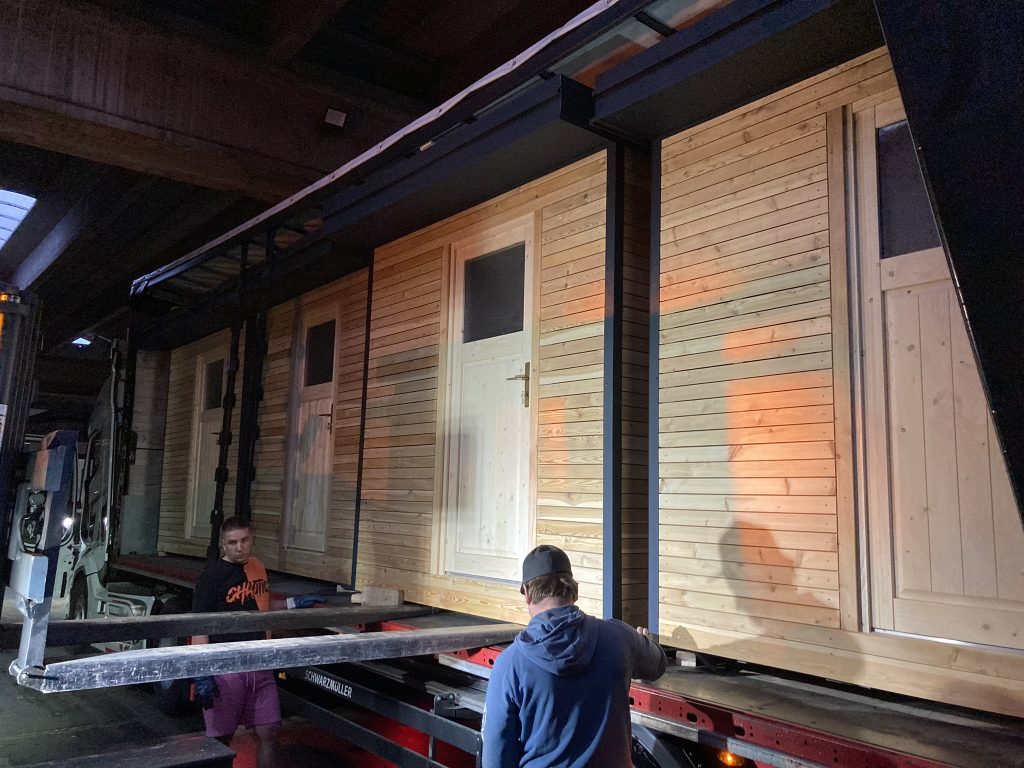
The BIGHEAD movable hybrid tent solves this exact problem. You set up the tents during the camping season. You rent them out to guests. When the season ends, you move them back into storage.
You set them up when the season starts. Run your camp business all summer. Then remove everything away when it’s over.
The land remains completely untouched. You do not need permanent foundations, and you avoid the need for year-round planning permission.
What is a Hybrid Tent?
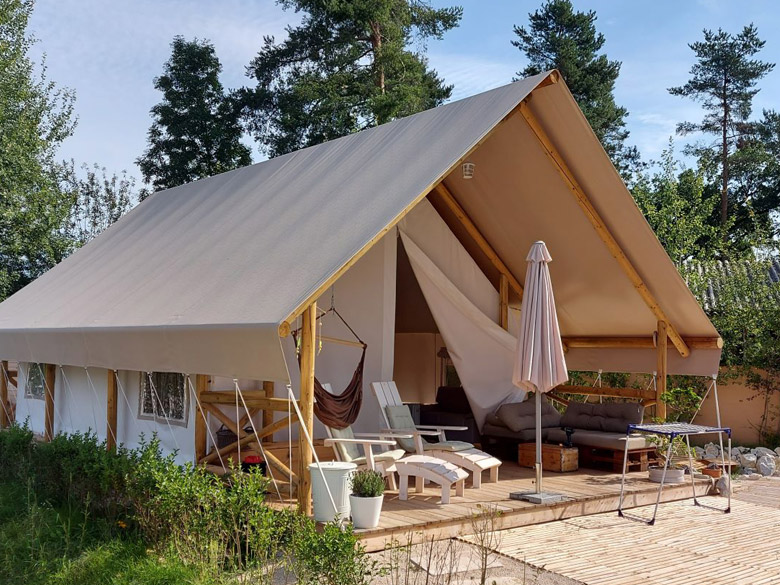
A standard single-layer tent (like Bell tent) is essentially a basic shelter that lacks construction strength. A large glamping tent is a permanent building designed to stay in one place. The BIGHEAD Plug & Play tent sits perfectly between the two. It’s a hybrid.
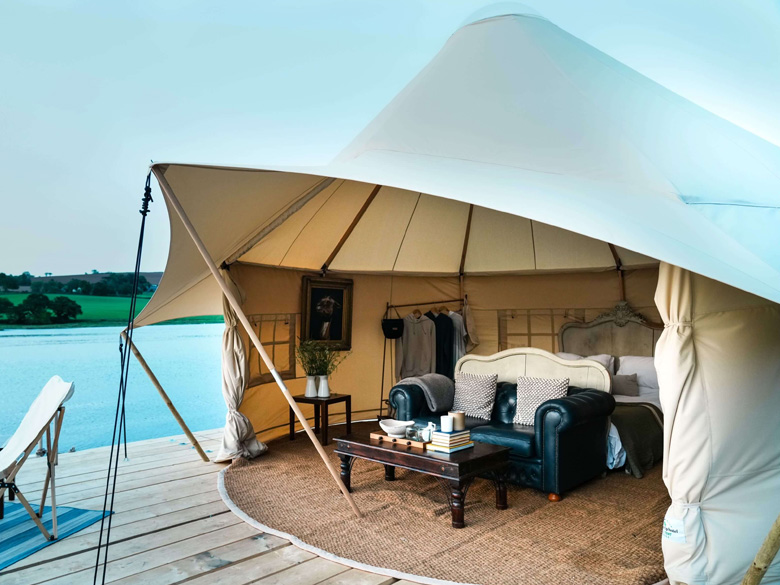
Most single-layer tents offer a poor guest experience. They become unbearably hot during the day, and at night, condensation drips onto the guests.
BIGHEAD solves this by using a double-layer canvas system with a dedicated air channel between the layers.
This air channel provides several crucial benefits:
- It keeps the interior cool when the sun is beating down.
- It retains warmth on cold nights without making the space feel stuffy.
- The outer layer takes the full force of wind and rain before it reaches the living space.
- The outer roof blocks harmful UV rays, protecting the inner canvas from damage.
This protective roof essentially extends the life of the tent by 7+ years compared to cheaper single-layer models.
BIGHEAD Plug & Play tent
We designed this tent specifically for uncompromising mobility.
The entire unit moves as one solid piece. The frame, the canvas, and the interior remain completely intact. You simply lift the tent with a forklift and move it into storage. It is instantly ready to use again next year.
This means zero disassembly, zero reassembly, and zero downtime. The joints remain perfectly tight, and the construction connections hold firm. The tent does not degrade during handling.
The tent is set on a raised platform, keeping it safely above ground level. This is a key advantage in areas with heavy rainfall. The ventilated, dry construction also prevents mould growth, a common issue in single-layer tents.
The Problem with standard single-layer tents
Without a thermal barrier, a single-layer tent acts like a greenhouse. In direct sunlight, the internal temperature rises rapidly. This forces guests to leave the tent during the day, ruining the relaxing aspect of their holiday. They can only return comfortably when the sun goes down.
Standard single-layer tents, such as classic bell tents, share several major flaws:
- Severe mould issues:
Cheap tents develop mould very quickly. It is incredibly difficult to clean and ruins the canvas. A standard bell tent often becomes completely unusable after just one or two seasons. - Extreme heat retention:
They trap heat and create a severe greenhouse effect, making daytime use impossible, especially in warm and humid climates. - Poor weather resistance:
Standard tents fail during heavy rain, storms, or hail. Heavy rain floods the floor, strong winds destabilise the structure, and guests feel unsafe inside.
By choosing a double-layer hybrid tent, you solve all of these operational problems while drastically improving the guest experience.
Low-cost tents often lead to a cycle of constant maintenance, guest complaints regarding heat and insects, and the inevitable cost of replacing degraded materials.
| Technical attribute | Single-Layer (Bell Tent) | BIGHEAD tent |
|---|---|---|
| Operational season | 1–3 months (summer only) | 3–5 months (heating option) |
| Average lifespan | 1–2 seasons (mold, UV degrading) | 7+ years (with maintenance) |
| Maintenance | High (frequent cleaning/patching) | Low (industrial-grade materials) |
| Guest rating potential | 4.5 – 6.5 (Economy) | 7.5 – 9.4 (premium/comforts) |
Tons of waste from used tents
The current cycle in many European campsites is unsustainable, both financially and environmentally.
Each year, operators purchase mass-produced, single-layer tents, typically imported from Asia.
By the end of the second season, these tents are usually heavily degraded. UV exposure breaks down the fabric, mould develops, and repairs are no longer viable. In reality, they are rarely repaired or serviced.
How this cycle works:
- Initial purchase:
Buy a batch of cheaply manufactured tents for around 1500 to 2000 euros each. They look perfectly fine when they arrive. The first camp season goes well. - Operational reality:
During the second season, visible degradation begins. UV exposure breaks down the fabric. Mould develops quickly inside the tent. By the end of the season, the canvas is severely compromised. - Disposal and repeat cycle:
Discarded tents generate significant waste. Unusable units go straight to landfill. The following season, new ones are ordered, and the cycle repeats.
Conclusion:
In practice, this means you are paying a recurring cost every two years for equipment that quickly becomes waste. This is not a sustainable business model.
The numbers don’t lie:
What appears cheap at the start becomes the most expensive option over time.
| Investment criteria | Single layer tent | Hybrid Plug&Play |
|---|---|---|
| Initial purchase price | €1,500 – €2,000 | ~€3,878 |
| Expected lifespan | 2 seasons (max) | 10 Seasons |
| Replacement cycle for 10 yrs | 5 Tents | 1 Tent |
| Total hardware cost | €7,500 – €10,000 | ~€3,878 |
| Waste Generated | 4 Discarded tents | 0 discarded tents |
The BIGHEAD Hybrid Approach
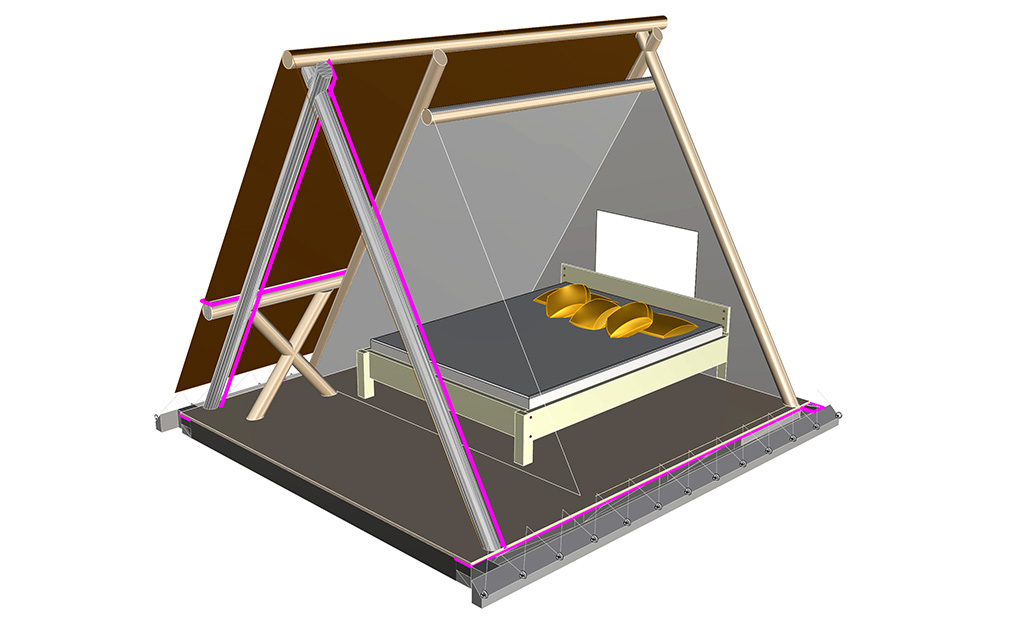
The BIGHEAD Hybrid uses a double-layer canvas system with an integrated air channel. This air channel acts as natural climate control. It prevents trapped heat and ensures the interior remains fresh.
A heavy-duty 650 g/m² outer roof takes the full force of the weather. The inner living space stays completely dry. It is fully protected from the UV rays that normally destroy standard canvas. We also use heavy-duty zips to provide a secure and lasting closure.
The tent features a completely modular design.
The tent sits on a raised, solid platform. This completely eliminates the risk of flooding during heavy rain. Guests feel safe inside a strong, secure structure.
Standard single-layer tents require a team of staff to pitch them every single year. The BIGHEAD Hybrid system solves this problem. You can move the entire unit into storage as one solid piece. The process is quick and simple.
This efficient design provides clear operational advantages:
- It drastically reduces labour hours.
- It minimises damage caused by constant handling (assembly and disassembly).
- It eliminates the need to dismantle tents at the end of August, exactly when your staff are already exhausted from the peak holiday season.
Comparison table:
| Feature | Single-Layer | Plug&Play Movable |
|---|---|---|
| Durability & UV | Rapid degradation of canvas and ropes. | High UV resistance; 10+ year lifespan. |
| Climate control | Greenhouse effect; hot and stuffy. | Air channel between layers; stays cool. |
| Weather safety | Prone to flooding and wind collapse. | Storm-resistant; elevated platform prevents flooding. |
| Hygiene | Susceptible to mould, algae, and rain tracks. | Outer layer protects inner canvas from moisture and growth. |
| Guest experience | Low sense of safety and comfort. | Solid, secure, and premium feel. |
| Logistics | Difficult dismantling and manual cleaning. | Movable on wheels for easy seasonal storage. |
| Environmental | High volume of annual landfill waste. | Sustainable, long-term asset. |
Mobile bathroom